

A product description that sells tells customers what the product is, who it is for and why it is better, then answers the questions they would ask in a shop: size, materials, compatibility, care, delivery and returns. Lead with benefits, put specifications in a scannable list, use your main keyword naturally and never copy the manufacturer's text.
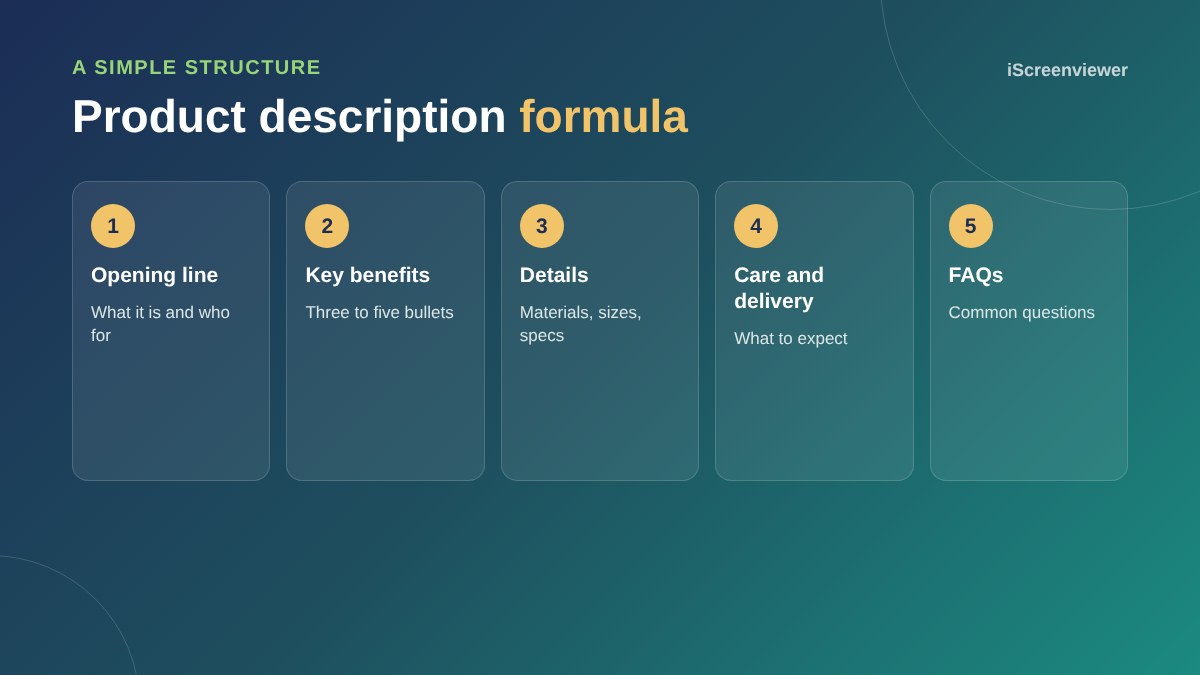
Start with who it is for
Your opening line should make the right customer think this is for me. Name the product, the type of person or use it suits and the main benefit.
Benefits before features
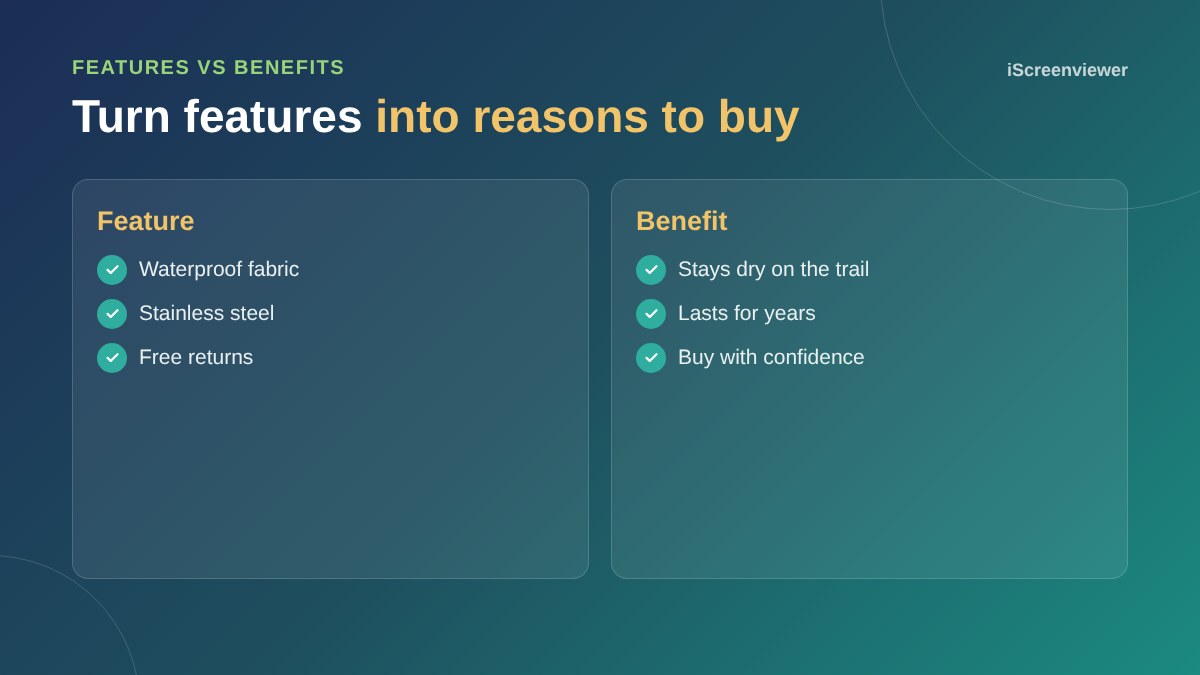
Features describe the product. Benefits describe what changes for the customer. Use both, but lead with benefits.
Make specs easy to scan
Use a short list for size, weight, materials, compatibility and what is in the box. Shoppers skim before they read.
Answer objections
Think about why someone might hesitate: will it fit, will it last, what if it is wrong? Answer it on the page, including delivery times and returns.
Write for search and AI
Use the words customers search for in the product title and opening sentence. Clear, factual descriptions also help AI search tools understand and recommend your products. See the product listing SEO guide and the AI search visibility guide.
Avoid duplicate content
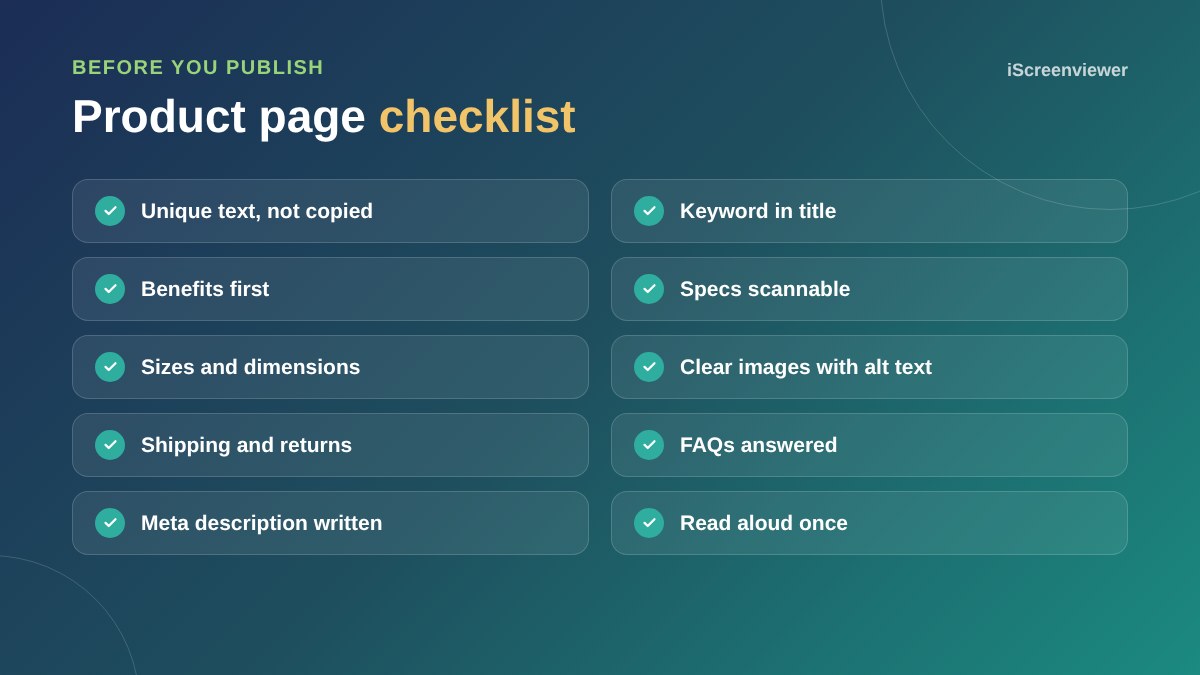
Manufacturer descriptions appear on many sites. Rewrite them in your own words with your own details.
An example
Compare these two openings for a pizza steel. Version one: Pizza steel, 6mm, carbon steel, 38cm. Version two: Make crisp, pizzeria-style bases in your home oven. This 6mm carbon steel holds far more heat than a stone, so your pizza cooks fast and evenly. The second tells the customer what they get and why it matters, then gives the specs.
Match the tone to your brand
A luxury jeweller and a camping store should not sound the same. Decide on three words that describe your brand voice, such as warm, practical and expert, and keep every description consistent. A short style guide helps when several people write products.
Use the same structure for every product
Consistency makes your store easier to shop. When every product page has the same order, customers know where to find sizes, materials and delivery information. It also makes writing faster, because you are filling in a template rather than starting from scratch.
Update your best sellers first
If you have hundreds of products, start with the pages that get the most traffic or sales. Check Google Search Console to find products with plenty of impressions but few clicks, then improve those titles and descriptions first.
Want your products written for you?
The Product Listing and SEO Batch writes SEO titles, descriptions, meta and alt text for your products.
Get product listings written →
Frequently asked questions
How long should a product description be?
Long enough to answer buyer questions. Simple products may need 100 words, while technical or expensive products often need more.
Can I use the manufacturer's description?
It is better to rewrite it, as the same text appears on many sites and gives Google no reason to rank your page.
Where should keywords go?
In the product title, the opening sentence, image alt text and the meta description, used naturally.
Should product pages have FAQs?
Yes. FAQs answer objections and help search engines and AI tools understand the product.
What is the difference between features and benefits?
Features describe the product. Benefits explain what the customer gains from those features.
Do product descriptions affect SEO?
Yes. Unique, helpful descriptions help product pages rank and convert.