

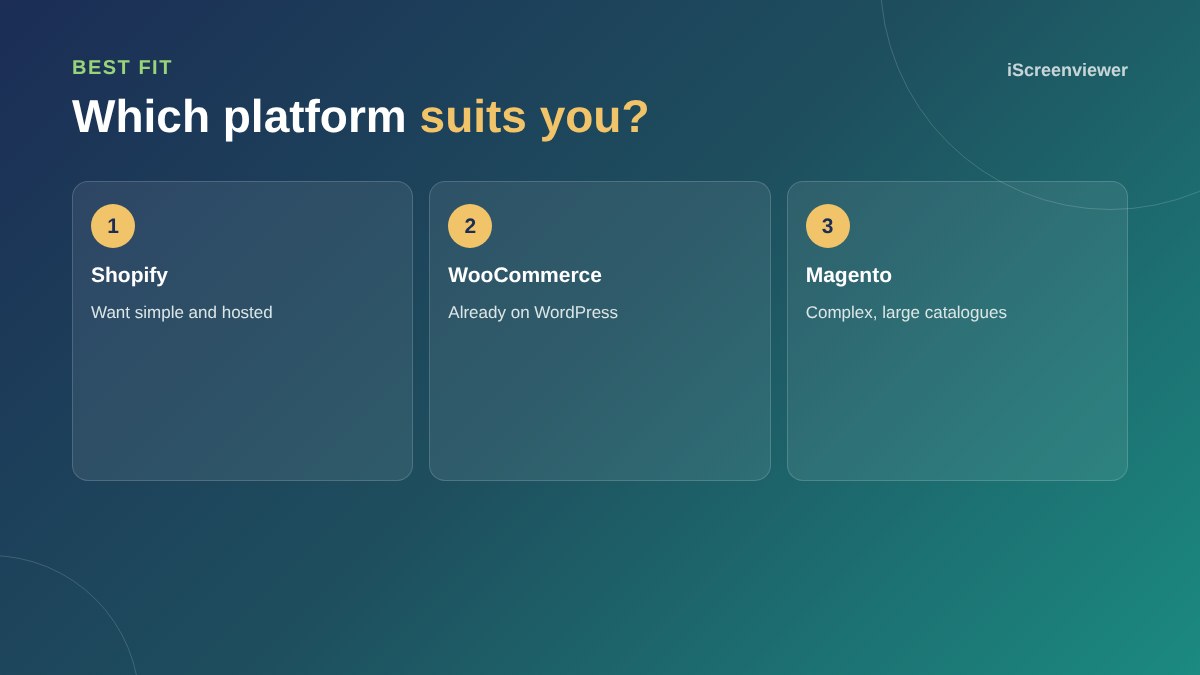
Shopify is the easiest choice for most small businesses because it is hosted and maintained for you. WooCommerce suits businesses that already have a WordPress website and want flexibility without a platform subscription. Magento, now Adobe Commerce with a free Open Source edition, suits large or complex stores with a development budget. The right choice depends on your products, budget and who will run the store.
Shopify
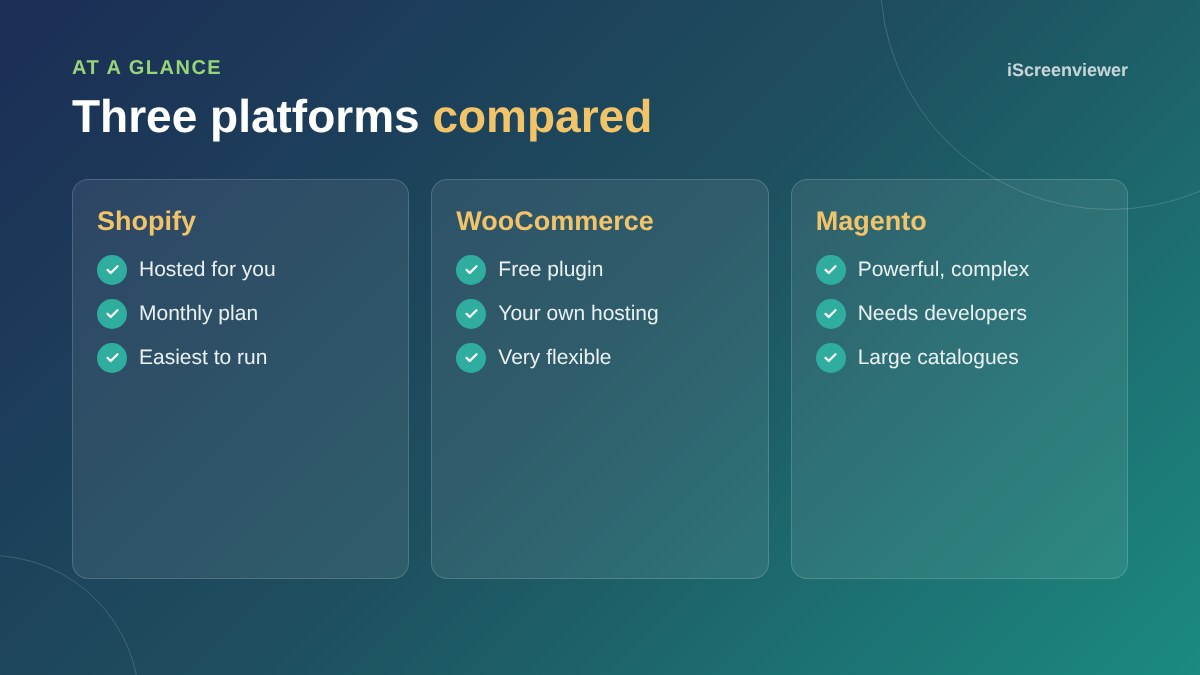
Shopify handles hosting, security and updates. You pay a monthly plan plus apps. It is quick to launch and easy for staff to manage, but deep customisation can mean paid apps or developer work.
WooCommerce
WooCommerce is a free plugin for WordPress. You pay for hosting, maintenance and any extensions. It is very flexible and keeps your content and store together, but you are responsible for updates and security. See how to set up WooCommerce.
Magento
Magento is powerful, handling complex catalogues, multiple stores and B2B features. It needs strong hosting and experienced developers, and security patching is essential. See how to secure a Magento website.
Cost over time
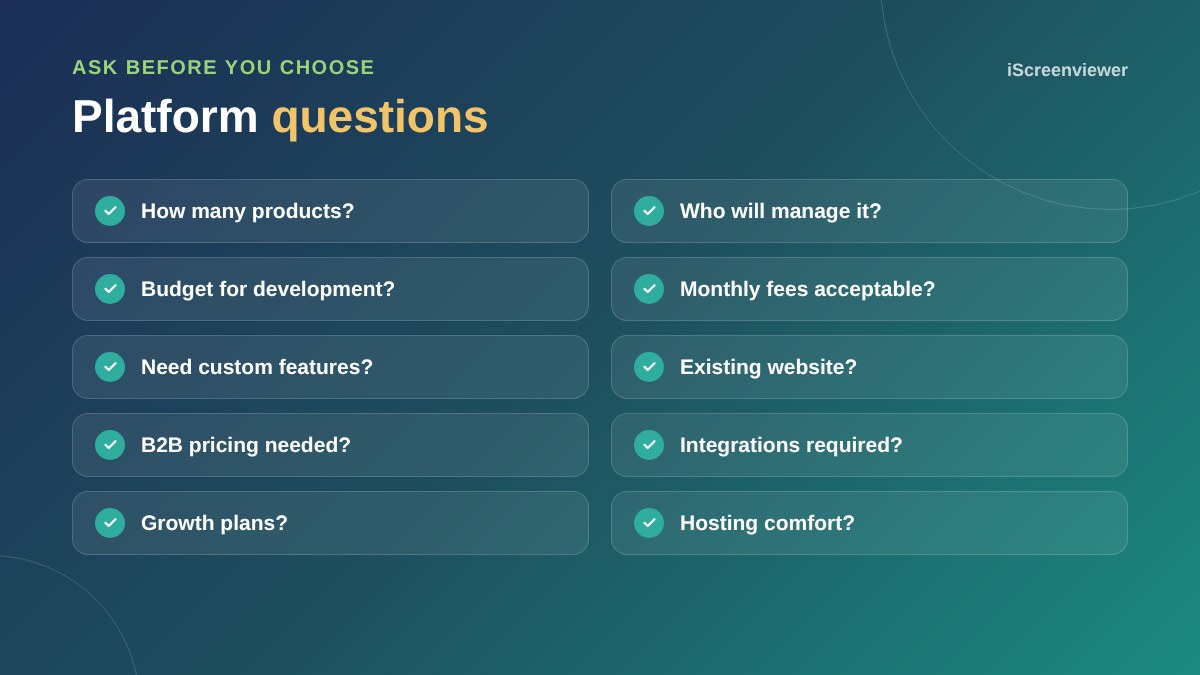
Compare the total cost over three years, not just the launch price: platform fees, apps or extensions, hosting, maintenance and development.
Our recommendation
For most small Australian businesses, it is Shopify or WooCommerce. For a deeper comparison of those two, read Shopify vs WooCommerce for Australian businesses.
Ease of use for your team
Think about who will add products, process orders and update content every day. Shopify's admin is the easiest for most people to learn. WooCommerce feels familiar if your team already uses WordPress. Magento's admin is powerful but has a steeper learning curve, and many changes need a developer.
Hosting, security and updates
With Shopify, hosting and security are included. With WooCommerce and Magento, you choose the hosting and you are responsible for updates, backups and security. That is not a problem with good hosting and a maintenance plan, but it needs to be in the budget from day one.
Flexibility and custom features
WooCommerce and Magento give full access to the code, so almost anything can be built. Shopify is flexible through its theme system and apps, and custom apps can extend it further. If you need unusual pricing, product builders or deep integrations, scope them early, as they can shape the choice of platform.
Changing platforms later
You are not locked in forever. Products, customers and order history can be migrated between platforms, and redirects protect your search rankings. Still, a migration costs time and money, so choose a platform that suits where your business will be in three to five years.
Not sure which to choose?
Book a free website consultation and get a clear recommendation based on your products and goals.
Frequently asked questions
Which is cheaper: Shopify, WooCommerce or Magento?
WooCommerce has no platform fee, Shopify has a monthly plan, and Magento usually costs the most to build and maintain. Compare total costs over several years.
Is Magento still used in 2026?
Yes, especially by larger and more complex stores, but it needs experienced developers.
Can I move from WooCommerce to Shopify later?
Yes. Products, customers and orders can be migrated, with redirects set up to protect SEO.
Which platform is best for SEO?
All three can rank well. Content, site speed and good product pages matter more than the platform.
Which platform is easiest to manage?
Shopify is generally the easiest for non-technical owners.
Which is best for a large catalogue?
Shopify and WooCommerce handle thousands of products with good setup. Magento suits very large or complex catalogues.