

ChatGPT and other AI tools recommend businesses based on what they can find and trust on the web. To improve your chances, make sure AI search crawlers can access your site, publish clear pages that answer the questions customers ask, add schema with accurate business details, collect reviews and get mentioned on other trusted websites. There is no paid shortcut, and no one can guarantee a recommendation.
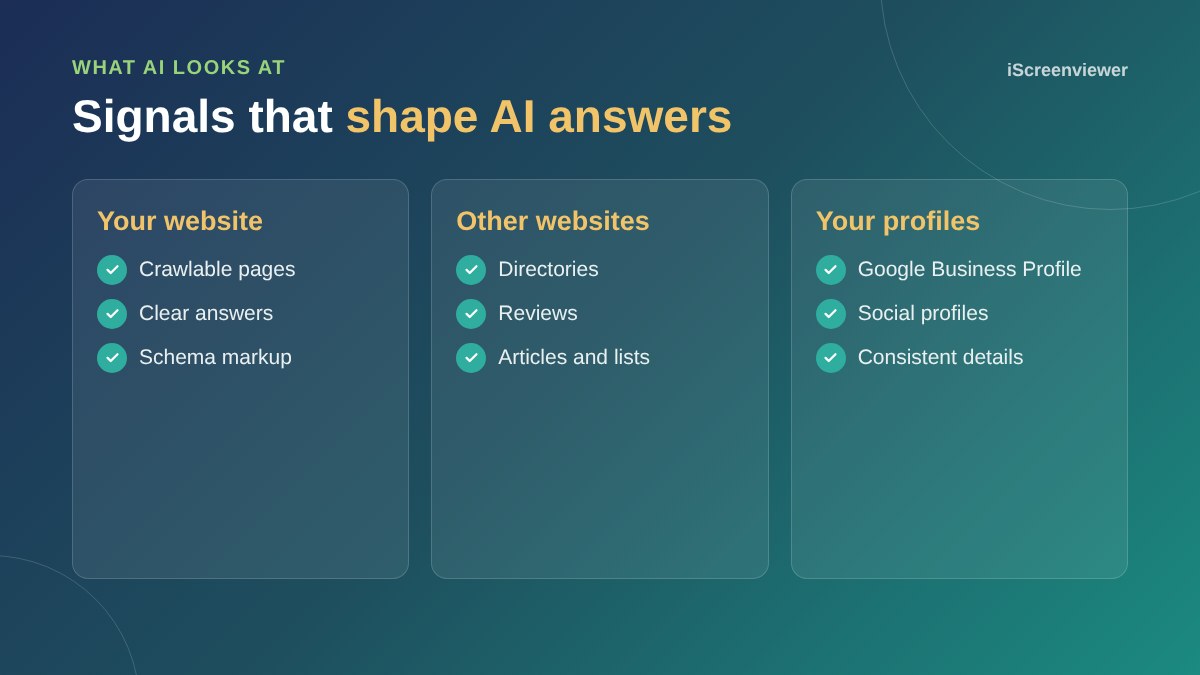
How AI tools find businesses
When someone asks ChatGPT for a recommendation, it often searches the web, reads several sources and summarises what it finds. Those sources include business websites, directories, review sites, news and lists such as best cafes in Newtown. The more consistently your business appears with the right details, the easier it is to recommend.
1. Let AI search crawlers in
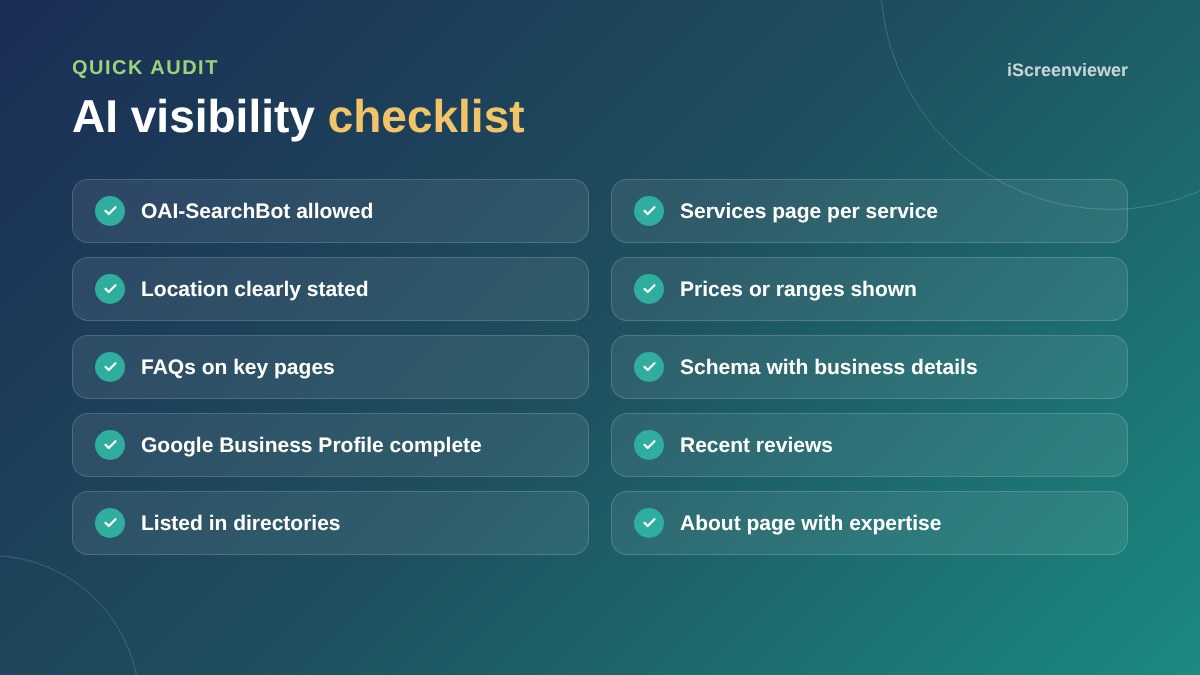
Check your robots.txt. OpenAI uses OAI-SearchBot for ChatGPT search, separate from GPTBot, which is used for training. You can block training and still allow search. Also check your firewall is not blocking legitimate crawlers.
2. Answer questions directly
AI tools quote pages that answer questions clearly. Start key pages with a plain answer: who you are, what you do, where you work and what it costs. Add FAQs that match what customers actually ask.
3. One page per service and location
A single services page listing everything is harder to match to a specific question than a dedicated page for each service.
4. Schema and consistent details
Use the same business name, address and phone everywhere, and add schema markup so your details are machine-readable.
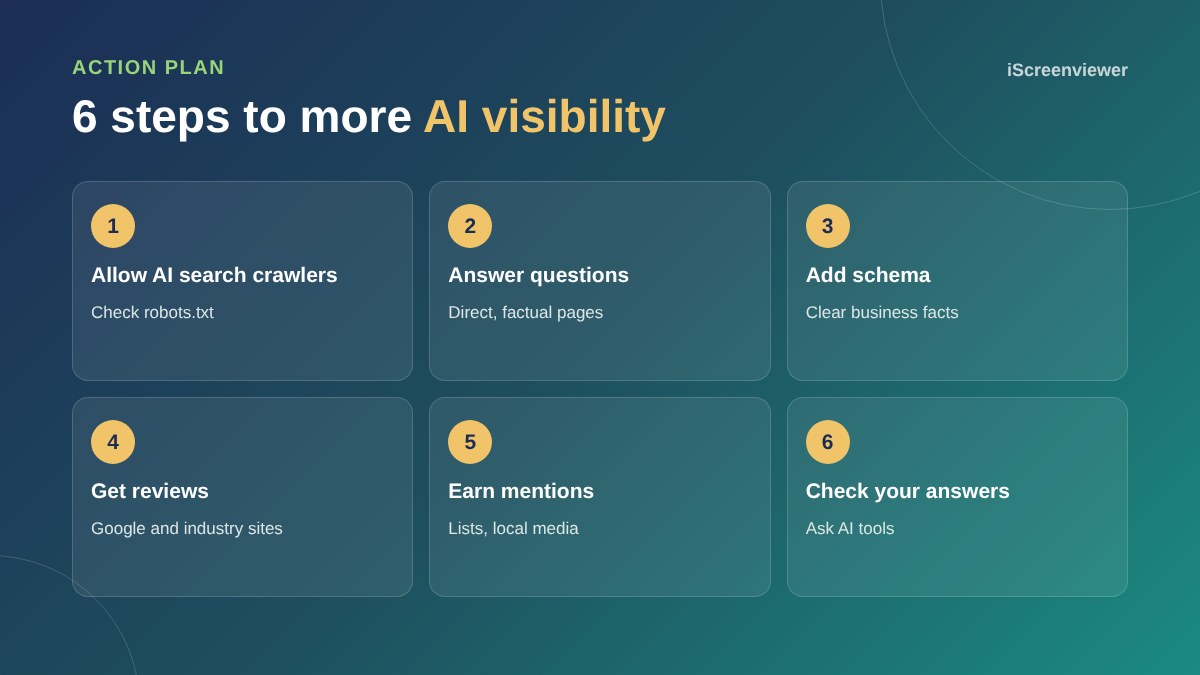
5. Reviews and mentions
Reviews on Google and industry sites, listings in quality directories and mentions in local media or industry lists all build the picture AI tools rely on. Ask happy customers for reviews regularly.
6. Test what AI says
Ask ChatGPT, Gemini and Perplexity the questions your customers would ask, and note which businesses and sources appear. Those sources show you where to get listed.
For more detail, read the AI search visibility guide and what is llms.txt.
What not to do
- Do not publish fake reviews or ask for reviews in exchange for discounts
- Do not stuff pages with lists of suburbs or keywords
- Do not create dozens of near-identical pages for every question
- Do not block all crawlers in robots.txt and then expect to be recommended
AI tools are designed to favour sources that look trustworthy and consistent. Shortcuts that might once have worked in search tend to make a business look less credible.
Measure the impact
In Google Analytics, check referral traffic from chatgpt.com, perplexity.ai and similar sites. Ask new customers how they found you, and add AI tools as an option on your enquiry form. Over time, you will see which efforts lead to real enquiries.
Want help with AI visibility?
The Keyword Planning, Schema and AI Search Visibility package audits how AI tools see your business and fixes the gaps.
Get help with SEO and AI search →
Frequently asked questions
Can I pay to be recommended by ChatGPT?
No. ChatGPT's answers are not paid placements. Visibility comes from being findable, clear and trusted across the web.
Does ChatGPT use Google?
ChatGPT search uses its own crawler and third-party search providers. Good SEO generally helps across all of them.
What is OAI-SearchBot?
OpenAI's crawler for ChatGPT search. Allowing it lets your pages appear in ChatGPT's search answers.
Do reviews affect AI recommendations?
Reviews are one of the signals AI tools often draw on when recommending local businesses.
How long does it take to appear in AI answers?
It varies. Crawling can be quick, but building mentions and reviews takes months of steady work.
Is AI search optimisation different from SEO?
It overlaps heavily. Clear content, technical health, schema and reputation help both.